Skip to content

ORB Trading Stocks

Opening range breakouts on individual company shares rather than indices. Screening a name for enough participation to trade, reading a gap open, and spotting the sessions where the market stops mattering.

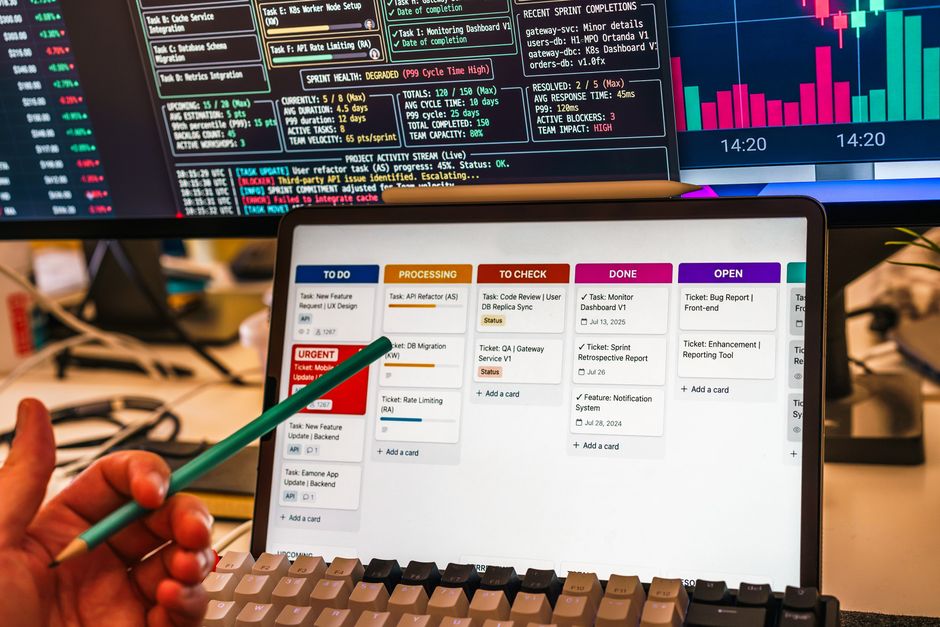
A person using a stylus on a tablet showing a business graph in an office setting.

What We Cover

A Single Name Behaves Like Itself

An index future is the aggregate of thousands of decisions and it moves the way a crowd moves. One company's shares are something else. The float is finite, the participants are fewer, and on any given morning a handful of large orders can set the tone for the entire session. That is why a breakout method carried across from index trading often behaves strangely on individual equities. The rules did not change. The thing they are applied to did, and in ways that show up in the first half hour.

Liquidity Is the First Filter

Before anything else about a name matters, it has to be tradeable. A range that forms on thin participation produces edges that were set by very few orders, a spread that quietly consumes a meaningful part of any result, and fills that arrive somewhere other than where the screen suggested. None of this appears in a backtest built on closing prices, and all of it appears in the account. Screening for depth is unglamorous and it removes more bad trades than any refinement of the entry rule ever will.

The Gap Rearranges the Furniture

Equities stop trading and then start again, and a name that opens well away from where it closed has already had its news event before the range begins. The opening period is no longer price discovering a direction from a settled base. It is participants working out what a piece of information is worth, often in stages, and the range that emerges from that process is a different object from the one that forms on a quiet open.

Correlation Comes and Goes

Most of the time a large company's shares drift with the market and a trader can half watch the index as context. Then a morning arrives when the name is being repriced for its own reasons and the market does not matter at all. Waiting for index confirmation on such a morning means missing the move, and using index weakness as a reason to doubt a strong single name break means talking yourself out of the best trades. Knowing which kind of morning you are in is the skill.

Which Articles Live Here

The articles here deal with opening range breakouts on individual company shares and stay away from index and futures material, which behaves differently enough to deserve separate treatment. They cover screening a name for enough participation to trade, what a gap open does to the range that follows, and how to recognise the sessions where a single name has detached from the broader market entirely.

Latest Guides

September 3rd, 2026

Screening Single Names for Enough Liquidity

Person using a calculator in a digital office for stock market analysis.

The most expensive mistake in trading opening ranges on individual shares is not a bad entry rule. It is running a perfectly good rule on a name that cannot support it. Thin participation degrades every part of the method at once, and it does so in ways that are invisible on a chart made of closing prices, which is where most people form their impression of whether a name is worth trading.

What Thinness Actually Does

Detailed charts and graphs on a document next to a laptop, representing data analysis.

The first casualty is the range itself. An opening range is supposed to summarise a period of price discovery, an argument between buyers and sellers. On a name where only a modest number of orders arrive in that period, the high and the low may each have been set by a single participant with no particular conviction. The lines are drawn from noise, and a break of them means correspondingly little.

The second casualty is the fill. A breakout order enters at the moment price is moving away from the level, which is the least favourable instant to demand liquidity. On a deep name the cost of that is small. On a thin one the order can walk through several price levels before completing, and the entry ends up meaningfully worse than the level that triggered it. The stop suffers the same treatment, on the way out, when conditions are worse still.

Average Volume Is a Weak Measure

A person working on a laptop with business analytics displayed, showcasing a remote work setup in a cozy environment.

The most commonly used screen is average daily volume, and it is the least informative of the available options. It is an average across a whole session, which says nothing about the opening period specifically, and it is easily inflated by a small number of unusual days. A name that traded heavily during one event weeks ago can still show a respectable average while trading almost nothing on an ordinary morning.

What matters is participation during the period you intend to trade, which is the opening stretch, and consistency of that participation across sessions rather than its average. A name that is reliably active every morning is tradeable. A name whose activity arrives in bursts is not, even if the two produce similar averages, because you cannot know in advance which kind of morning you are getting.

The Spread Tells You Directly

The quoted spread during the opening period is the most honest single indicator, because it is the cost you actually pay and it is visible before any trade is placed. A spread that is wide relative to the distance the name typically moves in a session means the round trip consumes a real portion of any result, and it does so on winners and losers alike.

The comparison that matters is spread against expected movement, not spread in absolute terms. A wide spread on a name that travels a long way each day may be perfectly acceptable, while a narrow spread on a name that barely moves can still be prohibitive. Judging one without the other is how a name that looks cheap to trade turns out not to be.

Depth Behind the Quote

Beyond the spread sits the question of how much can be done at it. A tight quote for a small size is not the same as a tight quote for a size that matters, and the difference only becomes apparent when an order larger than the displayed quantity arrives. Anyone trading size that approaches the displayed depth is effectively trading a wider spread than the screen advertises.

This scales with the position, which means liquidity screening is personal rather than absolute. A name that is comfortably deep for one trader is thin for another running a larger book. The useful question is not whether the name is liquid but whether it is liquid enough for the size you intend to use, and that question has to be re-asked whenever the size changes.

Building the Screen and Leaving It Alone

A workable screen is short. Consistent activity in the opening period, a spread that is small relative to the name's typical daily movement, and enough depth at the quote for the position size in use. Three checks, applied before the session, producing a list.

The discipline is in respecting the list once it exists. The temptation is always to make an exception for a name that is not on it but is doing something interesting that morning, and interesting is precisely what a thin name looks like when a few large orders arrive at once. The screen was built calmly, in advance, with no position at stake. That is the version of your judgement worth deferring to.


September 3rd, 2026

The Gap Open and What It Does to the Range

Overhead view of a laptop showing data visualizations and charts on its screen.

A share that opens well away from where it closed the previous session has already done something before the opening range begins. The information that caused the move arrived while the market was shut, and the first minutes of trading are not price discovering a direction so much as a large number of participants arriving at different conclusions about what a piece of news is worth. The range that forms out of that process is a different object from the one that forms on an ordinary open, and the breakout rules applied to it deserve to know that.

The Reference Points Have Moved

Flatlay of a business analytics report, keyboard, pen

On a normal open, price begins near the previous close and the levels traders watch are close at hand. After a large gap, that whole scaffolding is somewhere else. The previous day's high and low may sit well below the current price, out of reach for the session, and the levels that would normally shape the day have no relevance to where trading is now taking place.

This leaves the opening range as very nearly the only structure available, which cuts both ways. It gives the range unusual importance, since there is nothing else nearby for price to react to. It also means the range is being asked to carry more weight than it was built for, with no confirming structure around it to say whether its edges are meaningful.

Two Ways a Gap Range Forms

A laptop displaying an analytics dashboard with real-time data tracking and analysis tools.

Some gap opens produce a range that is a genuine argument. Buyers who think the news justifies more and sellers taking the opportunity to exit trade against each other across a defined band, both edges get tested, and the resulting range is a real summary of disagreement. A break of it means something, because it means one side gave up.

Others produce a range that is only a spike and its aftermath. Price opens, runs violently in one direction for a few minutes as the first orders clear, then settles. The high of that spike becomes the range high by accident. Nobody defended it, nobody argued over it, it is simply the furthest the initial surge carried. A break of that level tells you almost nothing, and a stop placed at the opposite edge of such a range sits an enormous distance away for no benefit.

Volume in the Opening Period

The most useful thing to watch on a gap morning is whether participation continues after the initial burst. Every gap produces heavy activity in the first minutes, because orders accumulated overnight all execute at once, and that first surge says nothing about what follows.

What distinguishes a name that will keep moving from one that is finished is whether meaningful activity persists through the rest of the opening period. Sustained participation suggests the repricing is still in progress and that participants are still adjusting. Activity that collapses after the first few minutes suggests the overnight queue has cleared and the name has found its level, at which point the range edges are unlikely to produce much.

Direction of the Gap Against the Trend

A gap that extends a move already under way and a gap that reverses one are different situations even when they look identical on the day. In the first case the news confirmed what the market already believed and the range that forms tends to be a continuation pause. In the second, a large body of existing holders have been caught on the wrong side, and their eventual exits provide supply that can keep pressing on the name for far longer than the news alone would justify.

That second situation is where a breakout in the gap direction has the most fuel behind it, because the selling is mechanical rather than opinion driven and it arrives in waves as different holders reach their own limits. It is also where a fade against the gap is most dangerous, for exactly the same reason.

Adjusting Rather Than Skipping

None of this argues for avoiding gap mornings, which would remove a large share of the days when single names actually move. It argues for reading the range before trusting it. A gap range with contested edges and sustained participation can be traded the way any range is traded. A gap range that is one spike with a flat tail is not the same instrument, and applying the same stop and target arithmetic to both is how a method that works on ordinary mornings quietly gives back its results on the interesting ones.

September 3rd, 2026

When a Single Name Ignores the Whole Market

Professional analyzing data chart on a tablet with stylus in an office setting.

Most trading days, a large company's shares behave like a slightly amplified version of the market they sit in. The index rises and the name rises. The index rolls over at midday and the name follows. Then a session arrives where the name goes its own way completely, and every habit built during the ordinary days becomes a liability. Recognising which kind of morning you are in is worth more than any refinement to the entry itself.

Professional workspace with trading charts and market data on screens, ideal for finance and investment contexts.

A large share of the money in individual names does not arrive because someone had a view about that company. It arrives through funds that buy or sell whole baskets, through hedges adjusted at the index level, and through flows that treat the name as a unit of exposure rather than as a business. On a quiet morning with no company specific news, that basket activity is most of what is happening, and the name moves because the basket moves.

This is why watching the index feels informative and usually is. On a day with nothing else going on, the market is genuinely the dominant input to the name's price, and a breakout that fights it is fighting the largest flow in the room.

Detailed view of a business workflow setup with tablet and multiple screens displaying data charts.

The link breaks when company specific information arrives that is large enough to overwhelm basket flow. Earnings, a change of guidance, a regulatory decision, a development involving a competitor that reprices the whole group. On those mornings the participants trading the name are doing so because of the name, and the basket activity that normally dominates becomes background noise.

It also breaks, less obviously, when a large holder is entering or exiting over a period of days. There is no announcement and nothing on a news feed. The signature is a name that keeps pressing in one direction regardless of what the market does, with participation heavier than usual and pullbacks that get bought or sold with unusual consistency. That kind of flow can persist far longer than a single session.

Reading the Divergence Live

The practical check is simple and takes a few seconds. During the opening period, note whether the name and the index are doing the same thing. If the index is drifting lower and the name is holding its high, something other than market direction is setting the price, and that something is stronger than the market at that moment.

A name holding up against a weak market is showing relative strength that is real, not an artefact, because the basket flow is pushing the other way and the name is absorbing it. This is the clearest live evidence available that the session is being driven by the name itself. The reverse is equally informative: a name that cannot rally on a strong market morning is being sold by someone who does not care what the market is doing.

How This Should Change the Trade

On a correlated morning, index behaviour is legitimate context. Taking a long breakout while the market is breaking down means accepting that the largest flow in the name is working against you, and it is reasonable to want more from the setup before doing it.

On a detached morning, that same caution is exactly wrong. Waiting for the index to agree means waiting for a confirmation that has no bearing on why the name is moving, and by the time it arrives the move is over. The sessions where a single name detaches are frequently the sessions where it travels furthest, so a rule that filters them out on market weakness is filtering out the best available trades and doing it systematically.

Write Down Which Kind of Morning It Was

The decision about which regime you are in belongs before the trade, made from what happened during the opening period, and it should be written down alongside the entry. Deciding afterwards is where the trouble lives. A trade that goes badly invites the explanation that the market was against it, which converts a losing trade into a story about correlation and prevents learning anything from it.

Recording, for each trade, whether the name was tracking the market or acting alone turns a vague impression into something checkable across a few weeks. It often reveals that a trader has been applying index caution on the detached days and ignoring it on the correlated ones, which is precisely backwards and impossible to notice without the note.